

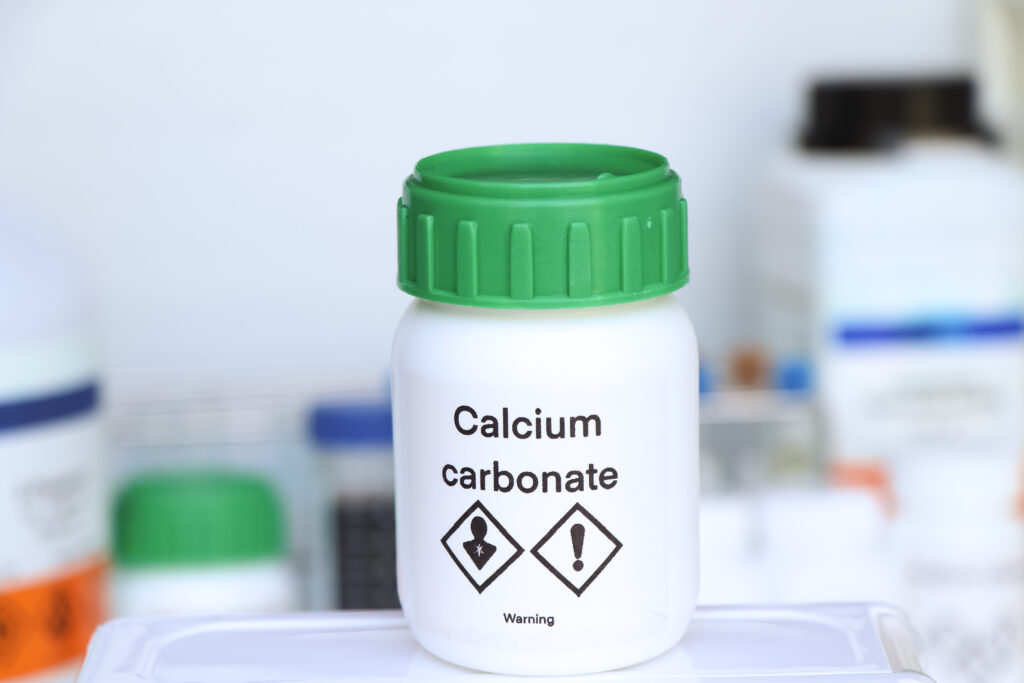
Formula :CaCO₃
1. Properties of Calcium Carbonate
Physical Form: occurs naturally in various forms, including limestone, chalk, and marble, as well as synthetically produced powders and nanoparticles
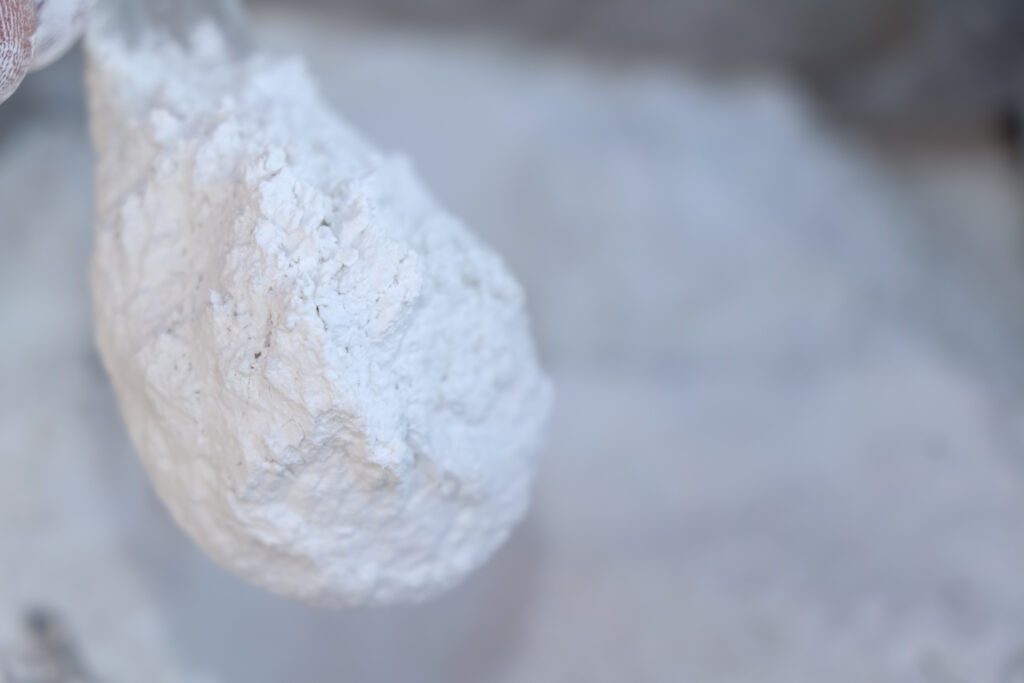
Calcium carbonate powder
2. Applications
2.1. Construction Materials: It is a primary component in the production of cement, concrete, and building aggregates, imparting strength and durability.
2.2. Paper Industry: it serves as a filler and coating pigment in paper manufacturing, enhancing brightness, opacity, and printability.
2.3. Pharmaceuticals: In the pharmaceutical industry, calcium carbonate is utilized as an antacid to neutralize gastric acidity and as a dietary supplement for calcium enrichment.
2.4. Environmental Remediation: it is employed in environmental applications, such as soil stabilization, pH adjustment in water treatment
3. Environmental Implications
3.1. Mining and quarrying activities for calcium carbonate extraction can lead to habitat destruction, soil erosion, and alteration of landscape features.
3.2. Water Pollution: Discharge of chemical-containing effluents into water bodies may elevate calcium ion concentrations, affecting aquatic organisms and disrupting ecosystem balance.
3.3. The production often involves energy-intensive processes, contributing to greenhouse gas emissions and climate change.
4. Safety Measures and Regulatory Compliance
4.1. Workers involved in chemical handling should use appropriate PPE, including respiratory protection, gloves, and goggles, to prevent inhalation and skin contact.
4.2. Regular monitoring of air, water, and soil quality in areas with calcium carbonate-related activities can help assess environmental impacts and guide mitigation efforts.
4.3. Comply with regulatory standards and guidelines governing calcium carbonate use, storage, transportation, and disposal to ensure environmental protection and occupational health.
