

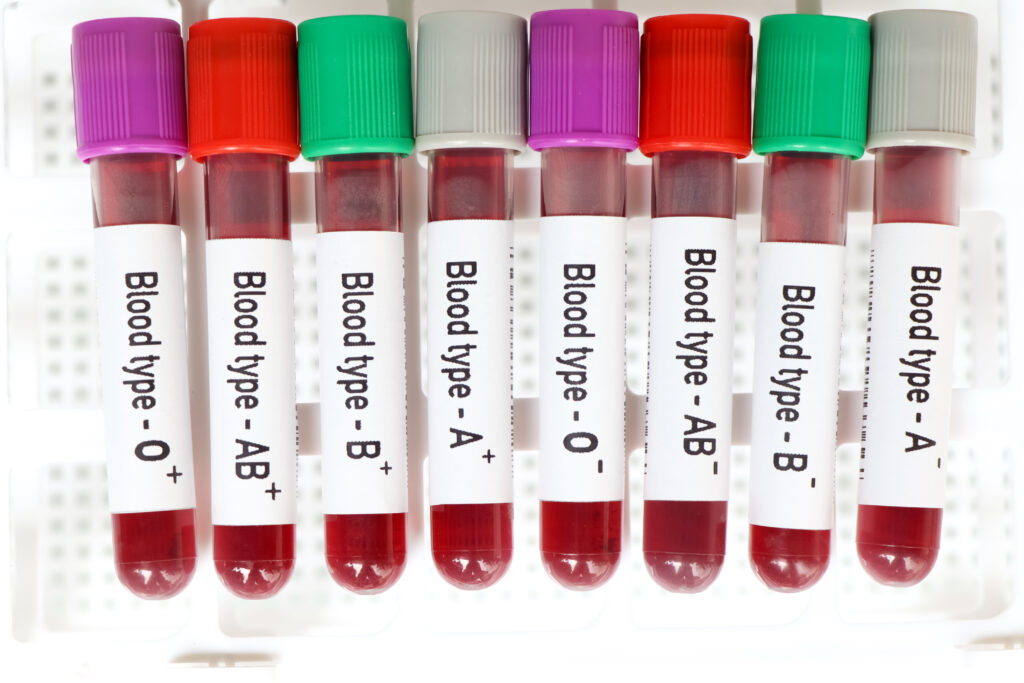
What Are Blood Types?
Blood types are categorized based on two primary systems: the ABO system and the Rh factor system.
1.The ABO Blood Group System
-Type A: Has A antigens on the surface of red blood cells and anti-B antibodies in the plasma.
-Type B: Has B antigens on the surface of red blood cells and anti-A antibodies in the plasma.
-Type AB: Has both A and B antigens on the surface of red blood cells and no anti-A or anti-B antibodies in the plasma.
-Type O: Has no A or B antigens on the surface of red blood cells but has both anti-A and anti-B antibodies in the plasma.
2.The Rh Blood Group System
The Rh factor is a protein that may or may not be present on the surface of red blood cells. If the Rh protein is present, the blood type is considered Rh-positive (e.g., A+, B+, AB+, O+). If the Rh protein is absent, the blood type is Rh-negative (e.g., A-, B-, AB-, O-).
Why Are Blood Types Important?
Blood Transfusions: The most immediate application of blood types is in blood transfusions. For a safe transfusion, it is crucial to match the donor and recipient’s blood types to prevent the immune system from attacking the transfused blood.
Organ Transplants: organ transplants require compatibility between the donor’s and recipient’s blood types.
