

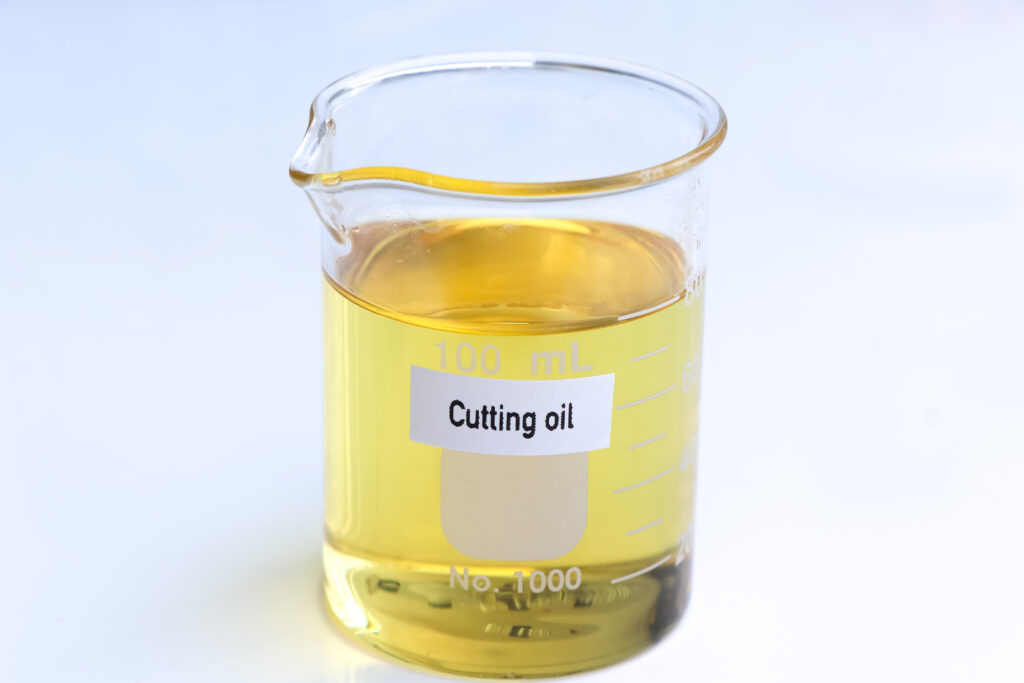
Cutting oil is an essential fluid used in machining and metalworking processes to reduce friction, cool the workpiece, and improve tool life.
Properties of Cutting Oil
Lubrication: reducing friction between the cutting tool and the material being worked on.
Cooling: cutting oil is dissipate the heat generated during the cutting process.
Benefits of Cutting Oil
-Increased Tool Life
-Prevention of Rust and Corrosion
-Reduced Heat Generation
-Enhanced Cutting Efficiency
Hazards of Cutting Oil
-Spilled cutting oil can contaminate water sources and soil if not disposed of properly. The chemicals and additives in the oil may be toxic to aquatic life and ecosystems.
-Prolonged contact with cutting oil can cause skin irritation.
-Cutting oil can create slippery surfaces on floors and machinery, increasing the risk of slips and falls in the workplace.
-Inhalation of oil mist or vapor may cause respiratory problems such as coughing, shortness of breath, and symptoms can be more severe with prolonged exposure.
-Although cutting oils are generally not highly flammable, they can catch fire if exposed to high heat, especially if mixed with other flammable materials.
Prevention and Safety Measures
-Maintaining the equipment and cleaning up oil spills immediately is crucial to reducing the risk of accidents.
-Workers handling cutting oil should wear appropriate PPE, including gloves, safety goggles, and protective clothing to prevent skin contact.
-Cutting oils should be kept in cool, dry places away from sources of heat or flames.
