

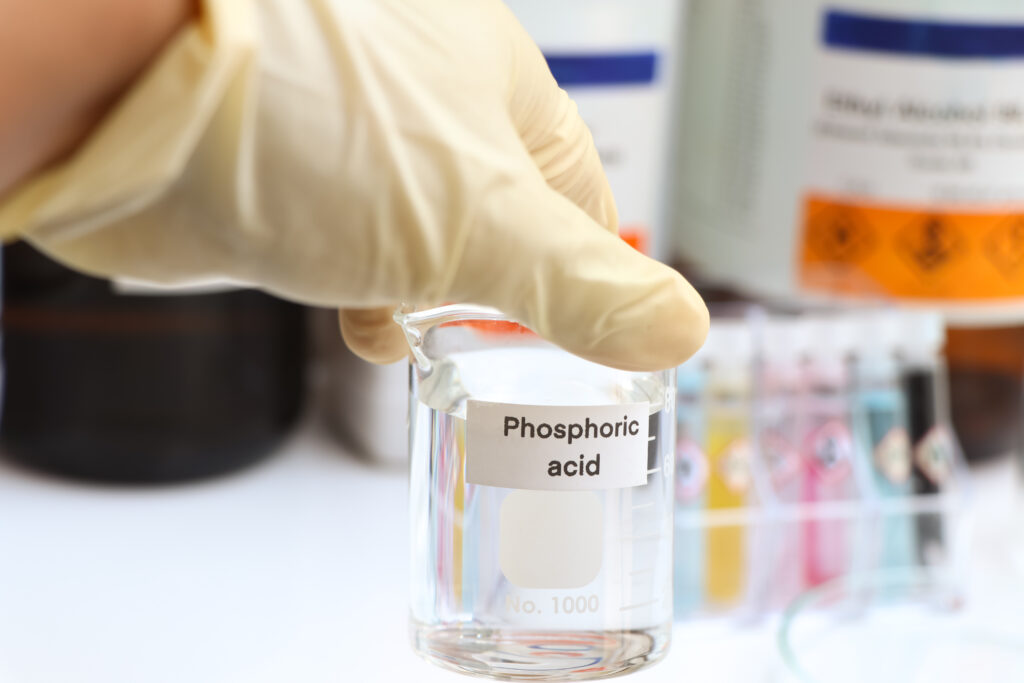
Formula :H3PO4
Phosphoric acid, a commonly used chemical compound, finds extensive applications in various industries and everyday products.
1. Attributes of Phosphoric Acid
1.1. Chemical Composition: it is a mineral acid characterized by its colorless, odorless
1.2. Acidity: With a high acidity level, it is widely recognized for its role as a pH adjuster and acidulant in various industrial processes and consumer products.
1.3. Solubility: it exhibits excellent solubility in water, making it suitable for applications where aqueous solutions are required, such as in the food and beverage industry.
2. Benefits
2.1. Agricultural Applications: In agriculture, phosphoric acid serves as a vital component in fertilizer formulations, providing essential phosphorus for plant growth and development, thereby improving crop yield and quality.
2.2. Industrial Processes: Its role in industrial processes encompasses metal surface treatment, water treatment, and as a catalyst in chemical synthesis, contributing to the efficiency and effectiveness of various manufacturing operations.
3. Dangers Associated
3.1. Corrosive Nature: Concentrated phosphoric acid can pose significant health hazards upon contact with skin, eyes, and mucous membranes, leading to severe burns and tissue damage.
3.2. contaminating soil, water bodies, and impacting ecosystems and aquatic life.
3.3. Toxicity: Ingestion or inhalation of chemical vapors or fumes may cause respiratory distress, gastrointestinal irritation, and systemic toxicity, posing risks to human health.
4. Preventive Measures for Safe Handling and Usage
4.1. Personnel handling phosphoric acid should wear appropriate PPE, including gloves, goggles, and protective clothing, to minimize direct contact and exposure.
4.2. Implementing engineering controls such as ventilation systems and chemical fume hoods can help mitigate airborne exposure and maintain safe working environments.
4.3. Store phosphoric acid in designated areas away from incompatible substances, ensuring proper labeling, containment, and segregation to prevent accidental spills or leaks.
4.4. Adequate training and education programs should be provided to personnel regarding the safe handling, storage, and emergency response procedures related to phosphoric acid to minimize risks and ensure preparedness in case of incidents.
