

formula: NaHCO₃
This academic article provides a thorough examination of sodium bicarbonate, commonly known as baking soda, exploring its attributes, benefits, potential risks, and preventive measures. Sodium bicarbonate is a versatile compound with numerous applications in various fields, including medicine, food, and household cleaning. While it offers many advantages, it is essential to understand its potential dangers and employ appropriate precautions to ensure safe
1. Attributes of Sodium Bicarbonate
1.1 Chemical Composition and Structure:
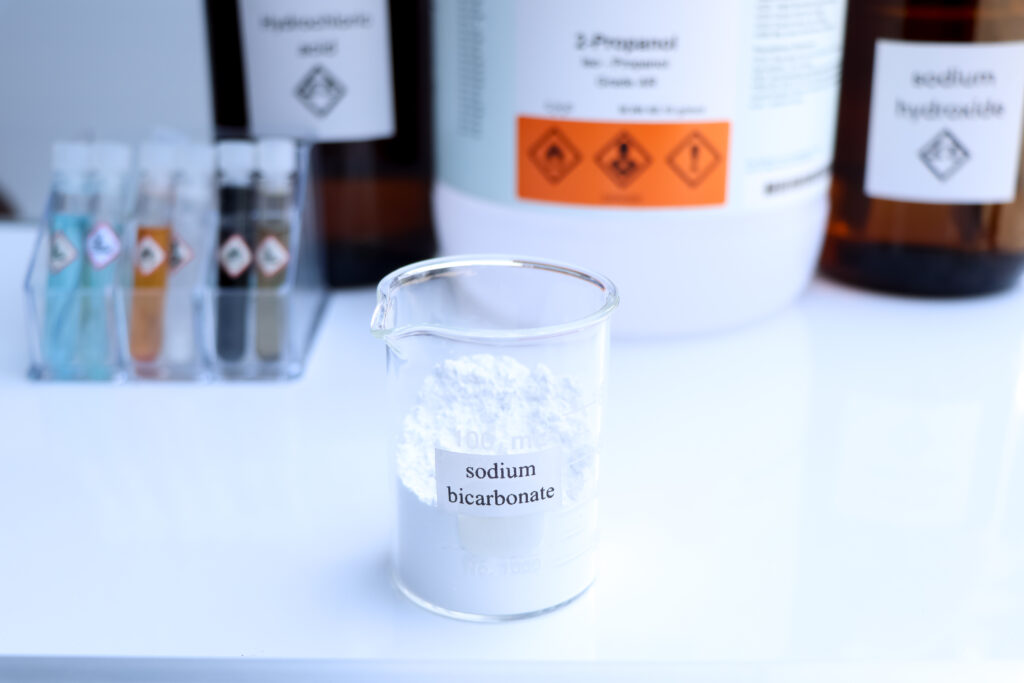
- Sodium bicarbonate is a white crystalline powder
- It is a weak base and reacts with acids to produce carbon dioxide gas, water, and corresponding salts.
1.2 Physical Properties: - Sodium bicarbonate is odorless
- It is soluble in water and forms a clear, colorless solution.
2. Benefits
2.1 Medicinal Uses:
- Antacid properties: it neutralizes excess stomach acid, providing relief from heartburn and indigestion.
2.2 Culinary Applications: - Leavening agent: it reacts with acidic ingredients in baking, causing dough to rise and giving baked goods a light texture.
- Tenderizer: It can be used to soften tough meat fibers and enhance the tenderness of cooked meats.
2.3 Household Cleaning: - Abrasive cleaner: it acts as a gentle abrasive, making it effective for removing stains and grime from surfaces without scratching.
- Deodorizer: It absorbs odors and can be used to freshen carpets, refrigerators, and trash cans.
3. Potential Dangers
3.1 Sodium Overload:
- Excessive consumption of it can contribute to high blood pressure and fluid retention.
- Individuals on a low-sodium diet or with kidney conditions should use it cautiously.
3.2 Interaction with Medications: - it can interfere with the absorption of certain drugs, such as antibiotics and vitamins.
- It is essential to consult healthcare professionals before using it alongside other medications.
4. Preventive Measures for Safe Usage
4.1 Dosage Regulation
4.2 Dietary Awareness:
- Maintain awareness of dietary sodium intake, accounting for sodium bicarbonate and other sources of sodium in the diet.
- Opt for low-sodium alternatives to mitigate health risks.
4.3 Storage and Handling Precautions: - Store sodium bicarbonate in airtight containers in a cool, dry environment, away from moisture and direct sunlight.
- Keep out of reach of children and pets to prevent accidental ingestion or exposure.
We would like to present products related, that you can purchase at our store
