

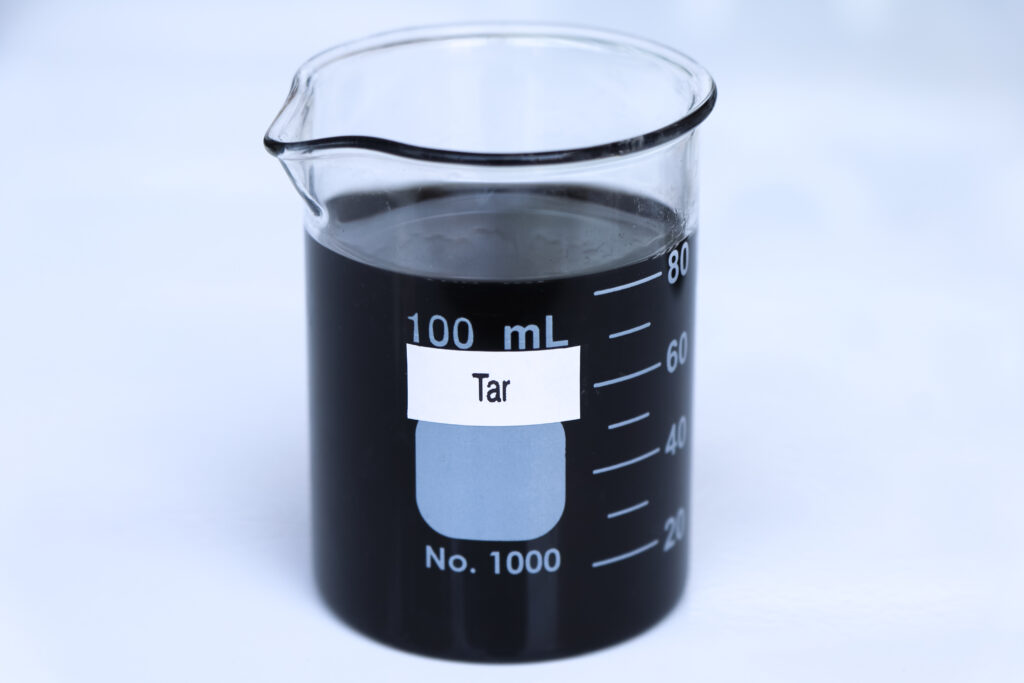
Its composition varies depending on the source, but it generally contains hydrocarbons, phenols, and other chemical compounds.
properties of tar
Density: It is denser than water
Appearance: it is typically black or dark brown, and it has a sticky, thick texture.
Solubility: it is soluble in organic solvents like alcohol, ether, and benzene but is insoluble in water.
Viscosity: it is highly viscous, meaning it flows very slowly, especially at lower temperatures.
Benefits
-Road Construction
-it can be processed to extract usable fuel.
-In construction, tar is used for waterproofing roofs, basements.
Hazards
-Toxicity: Tar contains various toxic compounds, such as polycyclic aromatic hydrocarbons
-Cancer Risk
-Respiratory Issues
-Environmental Hazards
-Skin Irritation
Prevention of Hazards
-Workers handling tar should wear appropriate PPE, including gloves, goggles, face shields, and respiratory protection.
-it should be stored in cool, dry places away from heat sources, as high temperatures can release hazardous fumes.
-Workers and individuals involved in tar-related operations should receive proper training in safety protocols, emergency procedures, and the risks of tar exposure.
-Used tar should be disposed of in accordance with environmental regulations.
