

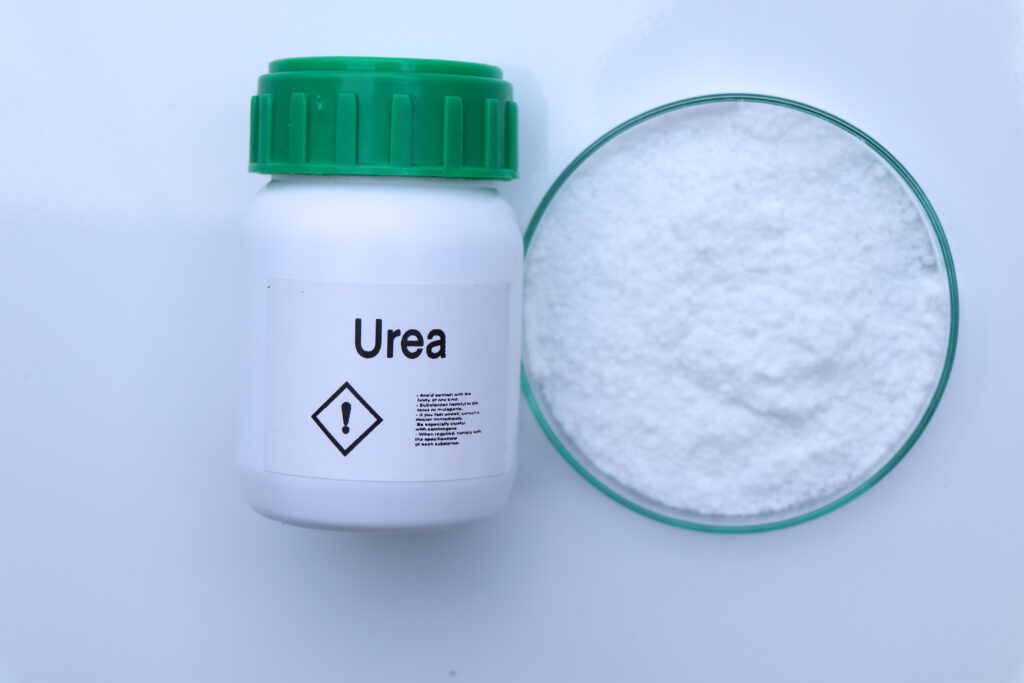
Formula :CO(NH2)2
Attributes of Urea
Urea, chemically represented as CO(NH2)2, Urea’s high water solubility and versatility make it a cornerstone in various sectors, including agriculture, pharmaceuticals, and manufacturing
- High solubility in water facilitates its application in liquid fertilizers and skincare products.
- Non-toxic nature ensures safe handling and application across different industries.
- Reactivity with other compounds allows for the synthesis of complex chemicals and polymers.
- Cost-effectiveness makes it an economically viable option for large-scale applications.
Benefits of Urea
- Agricultural Use: Acts as a vital component in fertilizers, providing essential nitrogen to plants for robust growth and increased yield.
- Skincare: Functions as a humectant in moisturizers, effectively hydrating the skin by attracting and retaining moisture.
- Industrial Applications: Serves as a raw material in the production of plastics, adhesives, and resins, contributing to the manufacturing sector’s growth.
Potential Dangers of Urea
- Inhalation Hazard: Inhalation of urea dust or aerosols may irritate the respiratory tract, resulting in coughing or breathing difficulties.
- Combustibility: Urea dust can form explosive mixtures in the air, posing a fire hazard in certain industrial settings.
- Skin Irritation: Direct contact with concentrated urea solutions may cause skin irritation or dermatitis in sensitive individuals.
- Environmental Contamination: Overuse of urea-based fertilizers can lead to nitrogen runoff, contaminating water bodies and causing eutrophication.
Strategies for Prevention
- Use gloves, goggles, and protective clothing when handling concentrated urea solutions to prevent skin and eye contact.
- Store urea products in a cool, dry place away from direct sunlight and moisture. Dispose of unused or expired products according to local regulations to prevent environmental contamination
- Follow recommended dosage guidelines and application methods for urea-based fertilizers to minimize nitrogen runoff and environmental impact.
- Maintain adequate ventilation in areas where urea dust or aerosols are generated to reduce the risk of inhalation exposure.
